




In pharmaceutical manufacturing, biotechnology laboratories, hospitals, and other controlled environments, maintaining sterility during material transfer is one of the most critical aspects of contamination control. Every transfer between cleanroom zones introduces potential risks that can compromise product quality, process reliability, and regulatory compliance. A Sterile Pass Box is specifically designed to eliminate these risks by providing a secure and validated transfer solution that prevents contaminants from entering critical production areas.
Modern facilities increasingly rely on a Sterile Transfer Chamber equipped with vaporized hydrogen peroxide (VH₂O₂) technology to achieve high-level biological decontamination before materials enter Grade A and Grade B clean environments. By integrating automated control systems with proven sterilization technology, the Sterile Pass Box offers a dependable solution for industries where sterility cannot be compromised.
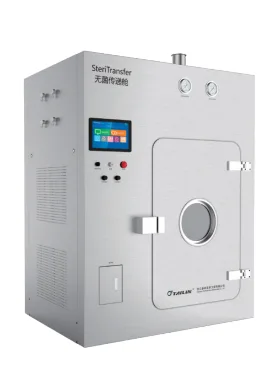
How a Sterile Pass Box Works
The working principle of a Sterile Pass Box is based on the biological decontamination capability of vaporized hydrogen peroxide (VH₂O₂). Liquid hydrogen peroxide is converted into vapor inside a sealed Sterile Transfer Chamber, allowing the sterilant to diffuse evenly throughout the chamber. The vapor effectively destroys microorganisms present both on the surfaces of transferred items and within the chamber atmosphere.
An integrated VH₂O₂ system communicates directly with the transfer chamber through a SIEMENS PLC control system, allowing operators to configure decontamination parameters before the process begins. Once the cycle is initiated, the built-in automated program completes the entire operation without continuous operator intervention, ensuring repeatable performance while reducing human error.
The chamber continuously monitors key environmental conditions, including temperature, humidity, and internal pressure throughout the decontamination cycle. This real-time monitoring ensures process consistency and provides valuable operational data for validation and compliance.
Applications Across Multiple Industries
A Sterile Pass Box is widely used in environments that require strict contamination control and air cleanliness.
Typical applications include:
- Pharmaceutical manufacturing facilities
- Biotechnology and microbiology laboratories
- Hospitals and healthcare institutions
- Food processing facilities
- Microelectronics manufacturing
- Other cleanroom environments requiring sterile material transfer
The Sterile Transfer Chamber is particularly suitable for transferring clean and dry materials into critical production areas. Typical transferred items include:
- Packaging materials and their outer packaging
- Production instruments
- Raw materials
- Manufacturing accessories
- Environmental monitoring equipment
- Other cleanroom production supplies entering GMP Grade A and Grade B areas
By ensuring that only biologically decontaminated materials enter sensitive production zones, the system significantly reduces contamination risks throughout the manufacturing process.
Advanced Features That Improve Operational Reliability
A modern Sterile Pass Box combines automation, process validation, and contamination control into a single integrated solution.
The biological decontamination process utilizes VH₂O₂ 102/202 as the sterilizing agent while maintaining normal atmospheric pressure and relatively low operating temperatures. This approach provides highly efficient decontamination while remaining environmentally friendly and suitable for sensitive materials.
To further enhance operational safety, the chamber includes continuous monitoring of:
- Temperature
- Relative humidity
- Chamber pressure
The system also provides a complete 40-cycle program along with on-site validation capabilities, making qualification and routine operation more convenient for regulated industries.
During both the biological decontamination phase and the exhaust phase, all incoming air passes through H14-grade HEPA filters, preventing secondary contamination and maintaining cleanroom integrity.
Material transfer safety is further enhanced through a sophisticated double-door system featuring:
- Pneumatic door sealing
- Pneumatic locking
- Interlocking operation that prevents both doors from opening simultaneously
Inside the chamber, turbulent airflow promotes uniform VH₂O₂ gas distribution, ensuring effective gas diffusion even when handling multi-layer material loads.
The loading and unloading doors are constructed with stainless steel frames and high-visibility tempered glass, while pneumatic seals provide reliable airtight performance without sacrificing operator visibility.
Technical Performance That Meets Cleanroom Requirements
The technical specifications of this Sterile Transfer Chamber demonstrate its suitability for high-grade cleanroom environments.
Key performance parameters include:
| Specification | Performance |
| Airflow | Turbulence |
| Cleanliness | GMP Grade A |
| Biological Decontamination Cycle Time | 150 minutes |
| Biological Decontamination Capability | Log reduction value ≥ 6 |
| VH₂O₂ Residual Level | ≤ 1 ppm |
| Supply Air Filtration | HEPA H14 |
| Exhaust Air Filtration | HEPA H14 |
| Printing Function | Biological decontamination cycle parameter saving and printing |
| Alarm Functions | High/low pressure alarm, door open timeout alarm, door lock alarm, concentration alarm, temperature alarm |
| Exhaust Interface | 3-inch or 4-inch sanitary interface |
| Hydrogen Peroxide Gas Cycle Interface | 1.5-inch sanitary interface |
| Chamber Material | SUS316L stainless steel |
A biological decontamination capability of Log reduction value ≥ 6 indicates an exceptionally high sterilization efficiency, making the system suitable for applications requiring validated microbial reduction. Meanwhile, maintaining a VH₂O₂ residual level of no more than 1 ppm ensures that transferred materials can be safely introduced into production environments following the completion of the sterilization cycle.
Why Choose an Integrated Sterile Transfer Chamber?
Compared with conventional material transfer systems, an integrated Sterile Pass Box provides several operational advantages.
Automated PLC control minimizes operator involvement while improving process consistency. Continuous environmental monitoring increases confidence in every decontamination cycle, and built-in parameter recording simplifies documentation for GMP compliance.
The combination of H14 HEPA filtration, pneumatic door interlocking, validated VH₂O₂ sterilization, and durable SUS316L stainless steel construction creates a highly reliable transfer solution capable of supporting demanding pharmaceutical and biotechnology production environments.
As cleanroom standards continue to become more demanding, selecting a reliable Sterile Pass Box is increasingly important for ensuring contamination-free material transfer. Tailin Scitech combines advanced Sterile Transfer Chamber design, automated VH₂O₂ decontamination, intelligent PLC control, and GMP-compliant engineering into a comprehensive solution for modern sterile manufacturing.
Featuring a 150-minute biological decontamination cycle, Log reduction value ≥ 6, VH₂O₂ residual ≤ 1 ppm, GMP Grade A cleanliness, H14 HEPA filtration, and a SUS316L stainless steel chamber, Tailin’s Sterile Pass Box provides the performance, safety, and reliability required by pharmaceutical companies, biotechnology laboratories, hospitals, and other industries where sterile transfer is mission-critical.
For more information, please visit Tailin’s website or contact Tailin directly at +86-571-8658-9087 or marketing@tailingood.com. You may also follow Tailin on Facebook, YouTube, LinkedIn and Instagram to stay updated on the latest products, technologies, and industry insights.
Read Our One More Blog: Glove Integrity Tester: Why Reliable Glove Leak Test Is Essential for GMP-Compliant Aseptic Manufacturing
