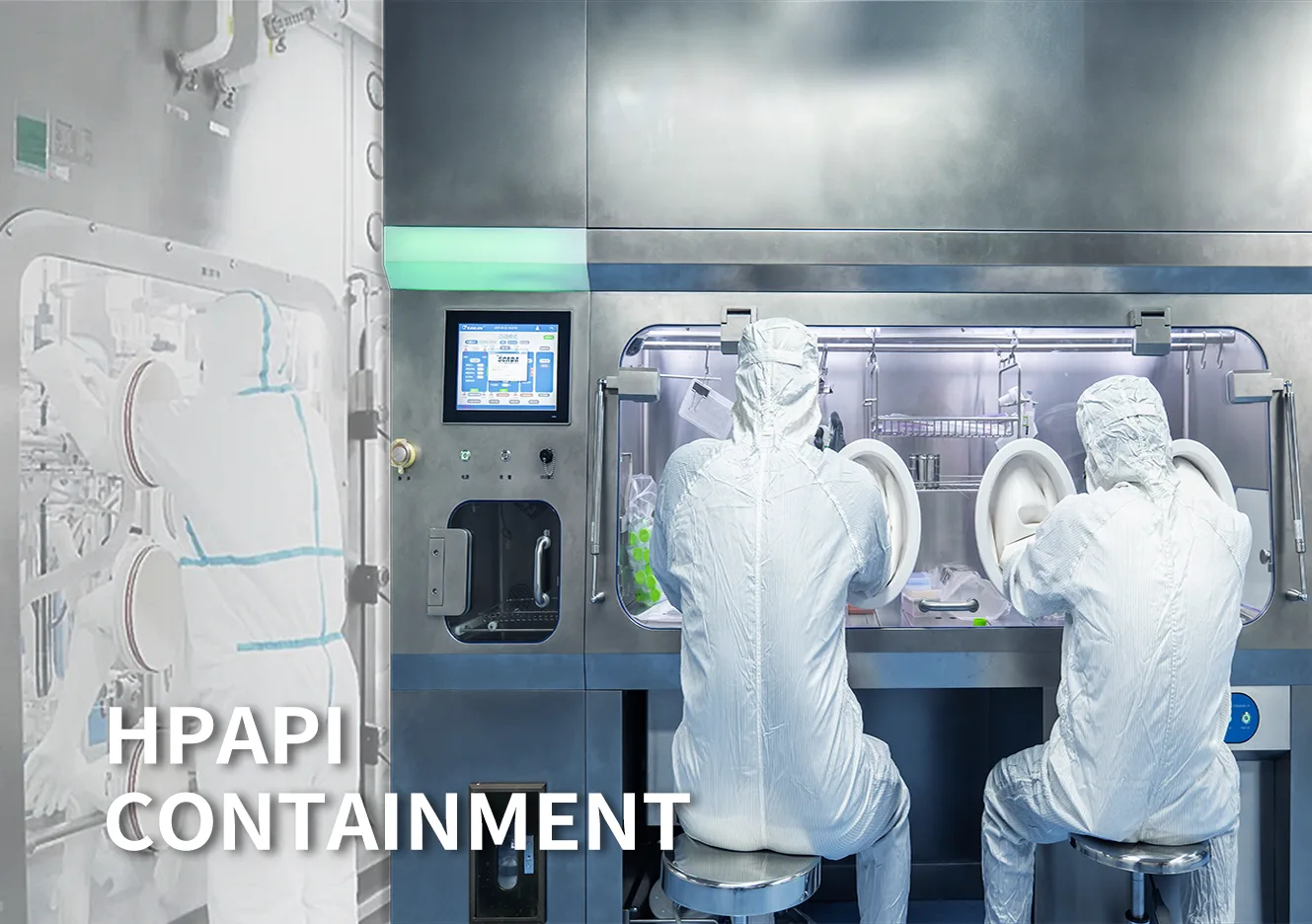
In the pharmaceutical landscape, the rise of oncology drugs, ADCs (Antibody-Drug Conjugates), and innovative hormonal therapies has brought High Potency Active Pharmaceutical Ingredients (HPAPIs) to the forefront.
While these compounds offer revolutionary therapeutic benefits, they pose a “double-edged sword” risk in manufacturing. With occupational exposure limits (OELs) often dropping below 1 μg/m³ (OEB 5), these substances can be carcinogenic, mutagenic, or toxic to reproduction at microscopic levels.
For global pharmaceutical manufacturers, the challenge is clear: How do we protect our people and the environment while maintaining efficient production?
Global Regulatory Landscape: Raising the Bar
The era of open handling is over. Regulatory bodies worldwide are tightening the standards for containment strategies:
· EU GMP Annex 1 (2022 Revision): Mandates a specific Contamination Control Strategy (CCS). It explicitly states that high-risk operations (like HPAPI processing) should be separated, favoring barrier technologies like isolators to minimize human intervention.
· ISPE Good Practice Guide: Emphasizes that “Containment at Source” is the most effective method for handling potent compounds, advocating for rigid isolators over PPE reliance.
· WHO TRS-957 Annex 3: Requires dedicated, self-contained facilities for hazardous substances, with separate air-handling systems and physical barriers to prevent cross-contamination.
Key Challenges in HPAPI Manufacturing
1. Extreme Safety & Total Containment: HPAPIs are potent even at microscopic levels, posing severe health risks. This demands a “Zero-Leakage” philosophy, raising safety benchmarks to unprecedented levels to protect both operators and the environment.
2. Precise Process Control: From synthesis to crystallization, every step requires rigorous control of temperature, pressure, and pH. Integrating Automation and PAT (Process Analytical Technology) is essential to ensure product purity and batch reproducibility.
3. High CAPEX & Operational Flexibility:HPAPI production requires bespoke, easy-to-clean (CIP/WIP) equipment. The challenge is balancing capital investment with workflow optimization.
4. Stringent Global Compliance:Every stage must strictly align with cGMP. Success depends on a robust QMS and constant readiness for unannounced audits (FDA, EMA).
Tailin Solutions:Precision Engineering for High Potency
At Tailin, we understand that “Safety” is not just a feature—it is the baseline of engineering. Our Containment Isolator ( Negative Pressure ) Systems are designed specifically to meet the stringent demands of global HPAPI manufacturers.
Why Leading Global Pharma Chooses Tailin:
✅ Bespoke Engineering & Customization
Tailored designs to seamlessly integrate with your specific production processes and facility layouts.
✅ International Explosion-Proof Compliance
Engineered to meet rigorous explosion-proof requirements (compliant with ATEX/IECEx standards) for hazardous environments.
✅ Third-Party Verified Containment (OEL < 10 ng/m³)
Proven performance with professional third-party SMEPAC testing reports, ensuring containment levels reach OEL < 10 ng/m³.
✅ Scientific Validation Management System
A robust validation framework (from DQ to PQ) ensuring all test results are reliable, traceable, and audit-ready.
Conclusion
As the demand for potent medicines grows, your containment strategy must evolve. Tailin provides more than just machinery; we deliver a turnkey safety ecosystem protecting your most valuable assets: your product and your people.