


Microbial testing in water systems is essential across pharmaceuticals, environmental monitoring, and municipal applications—but it remains prone to error. Enzyme substrate methods for coliform detection are widely used for their efficiency, yet inconsistencies in real-world application persist. Even small deviations in sampling or incubation can significantly compromise data accuracy.
1. Q: Is pre-treatment required for water samples containing residual chlorine prior to coliform testing?
A: Yes, it is necessary.
Residual chlorine includes free residual chlorine and combined residual chlorine. Both of these can rapidly damage the structure of bacteria, causing them to become inactive and thereby leading to an underestimation of microbial counts.
Form 1: Standards related to residual chlorine treatment
|
Regulation |
Residual Chlorine Requirements |
| ISO 19458 | ISO 19458:2006
5.4:Water quality-Sampling for microbiological analysis: “If the water sampled is known or suspected to contain an oxidizing disinfectant (e.g. chlorine, chlorine dioxide or ozone), a reducing agent shall be added to the sample container… Residual chlorine (including free and combined chlorine) must be neutralized immediately at the time of sampling to prevent microbial inactivation.” |
| U.S. EPA | 40 CFR 141.21 & Method 9060A:
“Samples containing residual disinfectants must be treated with sodium thiosulfate (Na₂S₂O₃) at the time of collection to eliminate residual chlorine and prevent continuation of bactericidal action during transit. Failure to neutralize chlorine may result in bacterial inactivation and false negative results in microbiological analysis.” |
| U.S. EPA |
U.S. EPA Guidance “Sterile sampling containers used for microbiological testing are typically pre-prepared with sodium thiosulfate to ensure immediate neutralization… The amount of sodium thiosulfate added should be sufficient to neutralize the expected concentration of residual chlorine without inhibiting microbial growth or interfering with the test method.” |
For water samples containing residual chlorine, the Tailin sterile sampling bag or sterile sampling bottle can be selected. Both types of products add sodium thiosulfate in accordance with the following standards:
If using the Tailin sterile sampling bag or sterile sampling bottle without added sodium thiosulfate, it is recommended to pre-treat the water samples containing residual chlorine first.
2. Q: Why is pre-treatment necessary for water samples with high levels of heavy metal ions?
A: Water matrices with elevated heavy metal concentrations may inhibit enzymatic activity or interfere with chromogenic reactions.
As outlined in ISO 9308-2 appropriate mitigation strategies—(e.g., EDTA)—are essential to maintain method performance.
The Tailin enzyme-substrate method effectively buffers heavy metal interference without chemical or physical interaction. Using Tailin consumables, no additional pre-treatment is required—even for water samples with high heavy metal content.
1. The reason for the appearance of light-colored holes in the enzyme-substrate method for detecting coliform bacteria:
If the result is a suspiciously positive one, the culture period can be extended to 28 hours for the final judgment.
Effective Results:
The 24-28 hour incubation window provides a validated recovery period for sublethally damaged coliforms. This approach ensures maximum sensitivity and is fully compliant with APHA Standard Methods 9223 B and GB/T 5750.12.
2. Why is it possible to extend the culture time to 28 hours in order to observe the results?
Extending incubation to 28 hours provides a validated recovery window, allowing sublethally damaged organisms to regain enzymatic function. This approach is consistent with established practices in American Public Health Association.
3. Why does the quantitative plate turn gradually yellow during the detection of fecal coliform bacteria?
Due to the heating method of the incubator and the placement and stacking method of the quantitative wells, the quantitative plates are not heated evenly, which affects the growth of fecal coliform bacteria.
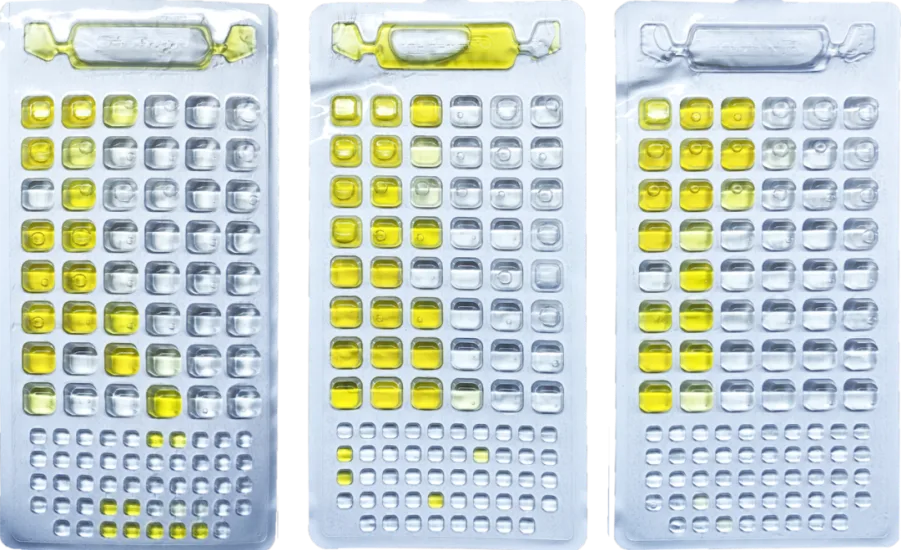
During the detection of fecal coliform bacteria, a water-sealed incubator is used.
Inconsistent color development in quantitative trays often signals temperature gradients within the incubator. To ensure data integrity, our protocols align with ISO 7218 and ISO/IEC 17025, requiring regular thermal mapping and calibrated temperature control within ±0.5.
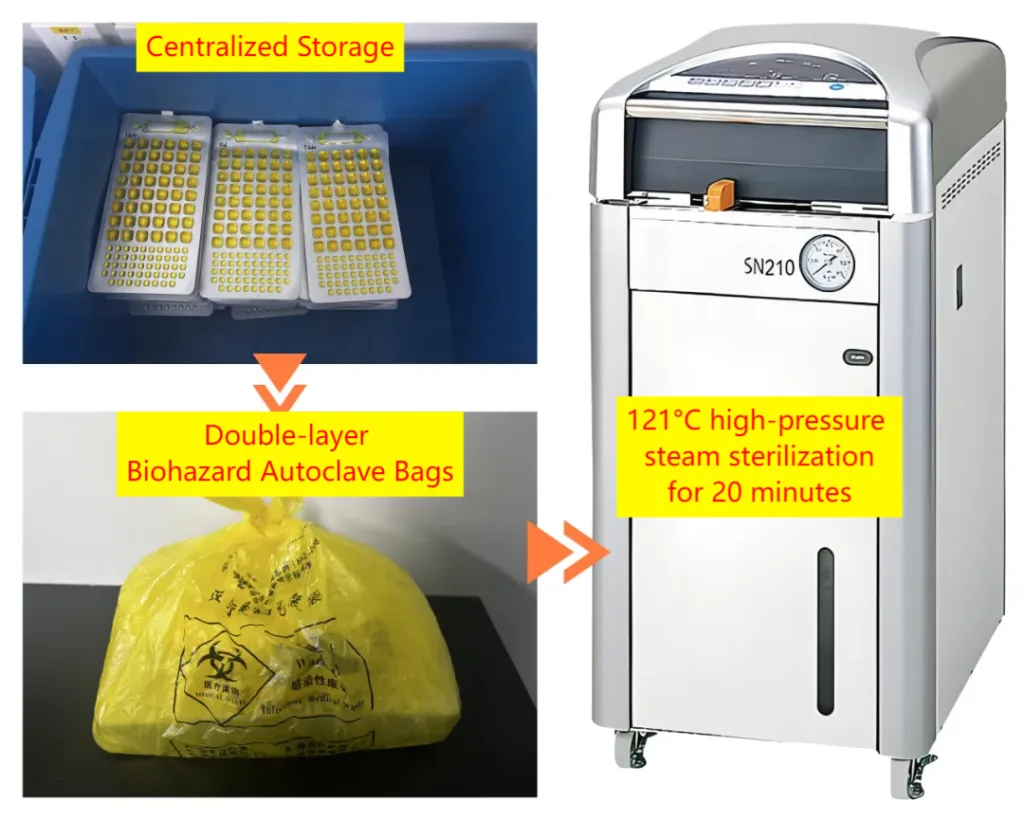
*This waste disposal protocols for spent quantitative trays are fully aligned with WHO Laboratory Biosafety Guidelines and ISO 15190, ensuring that all biohazardous materials are decontaminated via 121°C steam sterilization before disposal.
For more information or to explore partnership opportunities, please visit our website or contact us at phone: +86 571 8658 9087, email: marketing@tailingood.com. Stay connected with Tailin through our social media channels on Facebook, YouTube, LinkedIn and Instagram to witness our ongoing journey toward excellence and innovation.
Read Our One More Blog: VH2O2 Sterilization Validation: Synergistic Roles of BIs and CIs


